More Recent Comments

Thursday, March 22, 2012

Richard Dawkins Defends the Reason Rally


Richard Dawkins writes in yesterday's Washington Post [Who would rally against reason?].
March 24th is a landmark date for Washington, D.C. Thousands will converge on the world’s leading capital city to celebrate the crowning human virtue of reason.

How have we come to the point where reason needs a rally to defend it? To base your life on reason means to base it on evidence and logic. Evidence is the only way we know to discover what’s true about the real world. Logic is how we deduce the consequences that follow from evidence. Who could be against either? Alas, plenty of people, which is why we need the Reason Rally.
I agree with Dawkins. "Reason" and rationality is what we should be promoting. If we are successful, then religion will disappear and atheism will be the default position. As Dawkins puts it in The God Delusion, the real battle is between rationalism and superstition or between reason and superstition.

Dawkins has a series of videos called The Enemies of Reason. They are promoted as: "Professor Richard Dawkins confronts the epidemic of irrational, superstitious thinking with logic, observation and evidence - in other words, through reason." Here's the episode on superstitious beliefs in health and medicine.


It's obvious that anyone who opposes vaccination and/or promotes alternative medicine is an enemy of reason. It's difficult to imagine how such a person could be invited to speak at the Reason Rally in Washington, right?

So why are Senator Tom Harkin and Bill Maher speaking if they are clearly enemies of reason [The Reason Rally ought to have some standards]?

It's because some of the organizers of the Reason Rally do not agree with Richard Dawkins. They see this event as an atheist rally and the speakers are being invited because they are prominent atheists, not necessarily rationalists. Hemant Mehta of Friendly Atheist is one of those people [Plan Your Own Reason Rally and Then Tell Me How It Goes].
Look, the organizers spent a long time listening to the suggestions of dozens of people (representing tens of thousands of atheists) regarding who should speak at the Rally. They did everything in their power to contact all the “big names” that people said they wanted to hear at the Rally. They rustled up and managed the hundreds of thousands of dollars in funding needed to put on an event of this magnitude. They got every major organization in our movement to work together to make this work — and that’s not an easy thing to do. They had to deal with the speakers complaining about their prominence on our website (yep, it happened).

Just about everyone believes in something irrational. Including atheists. So, yes, you’re going to hear people at the Rally who hold ideas we think are completely unreasonable. Maybe even harmful.

If we got rid of every speaker who held an irrational belief, there would be no one left on that stage.

So deal with it.

I’m not saying you shouldn’t call them out where they’re wrong. Have at it. I did it, too. In many cases, they deserve it. But to suggest the organizers are at fault for inviting really famous atheists who hold some view you don’t agree with is absurd. Almost as ridiculous as faulting them for accepting a greeting from a sitting U.S. senator who stands to lose a lot more than he’ll gain for addressing our crowd.
This is going to be confusing. Who's right? Is this a Reason Rally as Dawkins and PZ Myers think or is it an Atheist Rally as Hemant believes?


Monday, March 19, 2012

I Rank Number One on Google

 
I was searching through some old posts today and I came across I Rank Number One on Google from October 2007. The idea was to come up with five words or phrases where Google would return something by you at the top of the page.

Back then I picked ...
  • Larry Moran
  • Sandwalk
  • Three Domain Hypothesis
  • adaptationist-pluralist
  • is there a genetic component to intelligence
All five of them worked in 2007 but today the last one has Sandwalk in 4th position. The list that works today is ....
  • Larry Moran
  • Sandwalk
  • Three Domain Hypothesis
  • adaptationist-pluralist
  • random genetic drift
How easy is this? Can every blogger come up with a list where they rank number one on the Google search? I tried it with a few blog names and it always seems to work. The names of some bloggers don't always work. We already know about a more famous "John Wilkins" for example and "Paul Myers" doesn't even mention the Pharyngula blogger in the top ten!1

I'm giving a lecture tomorrow on the Three Domain Hypothesis and why it is no longer valid. I still have the top three hits for this topic on Google. In case you've forgotten, you can read about it at: Theme: The Three Domain Hypothesis.


1. "Paul Zachary Myers" works, but that's cheating.

Dynamics and Sloppiness in Protein Synthesis

 
Protein synthesis can be divided into three stages.

First, there's the initiation stage when a ribosome binds to the initiation codon in messenger RNA (mRNA) and the translation initiation complex forms by recruiting additional components.

Second, there's the elongation stage when the elongation complex moves along the mRNA translating the coding region and producing a polypeptide chain. The elongation rate is relatively constant but from time to time the elongation complex pauses at particular sites that are difficult to translate.

Finally, the elongation complex encounters a termination site where it disassembles and the ribosome with its various factors is released from the mRNA.

We Are All Apes

 
Richard Dawkins created a bit of a stir among the theists by claiming that he is an African ape.


Someone named Vasko Kohlmayer was partularly upset so he wrote up a "rebuttal" for the Moonie newspaper The Washington Times: Is Richard Dawkins an Ape?.

I don't much care about the opinions of theists like Vasko Kohlmayer because they have an obvious agenda. Scientific arguments are meaningless to them.

But I do care about the opinions of other scientists and philosophers. Jerry Coyne explains why we are apes and why it's not a good idea to say that people living in Oxford or Chicago are African apes [Washington Times denies that Richard Dawkins is an ape]. I agree with Jerry.

John Hawks disagrees [Humans aren't monkeys. We aren't apes, either.]. He claims that the term "ape" is not a legitimate phylogenetic term and therefore is doesn't have to refer to a monophyletic group.
Chimpanzees are apes. Gorillas are apes, as are bonobos, orangutans, and gibbons. We routinely differentiate the "great apes" from the "lesser apes", where the latter are gibbons and siamangs. Humans are not apes. Humans are hominoids, and all hominoids are anthropoids. So are Old World monkeys like baboons and New World monkeys like marmosets. All of us anthropoids. But humans aren't monkeys.
I don't agree with this distinction. There's nothing to be gained by saying that our closest relatives are apes but we aren't.

John Wilkins thinks we are apes [Are humans, apes, monkeys, primates, or hominoids?]. John argues like a philosopher but, in this case, he's right.
It is not possible to stem the tide of linguistic change, as the Académie Française has found out repeatedly. If experts can redefine terms influentially, then there is nothing wrong with that so long as it doesn’t confuse the experts. Using paraphyletic terms (that is, group names that denote what is left of the group once a subset has been removed) is a Very Bad Idea that hangs on in science, but it need not hang on in folk usage. And there’s nothing wrong with saying “humans are apes”, because, on the best construal of what those terms denote, they are.

Neil Shubin’s excellent book Your Inner Fish makes a similar point. Where once a “fish” was anything that lived in water (including swans, geese, alligators and crocodiles, whales, and water snakes), it came to mean a vertebrate that had gills and fins and scales. Shubin shows how the Gnathostomes (jawed fishes) includes land vertebrates, including mammals and ultimately us, as well. Language can change…

UPDATE: Brian Switek of Laepaps weighs in with: I’m an Ape, and I’m Also a Fish.


Monday's Molecule #162

 
The last few challenges have been too easy so I'm going to make this week's molecule a bit more difficult. Not only do you have to identify the molecule but you also have to identify each of the four residues that are sugar derivatives. What is the molecule in blue and what are the other three sugary-looking residues?

Be sure to give a complete unambiguous name—that means getting the stereochemistry correct.

Post your answer in the comments. I'll hold off releasing any comments for 24 hours. The first one with the correct answer wins. I will only post correct answers to avoid embarrassment. The winner will be treated to a free lunch. I'll be setting up a lunch for this Thursday so expect an email message. If I owe you a lunch, it wouldn't hurt to remind me in case I forget you.

There could be two winners. If the first correct answer isn't from an undergraduate student then I'll select a second winner from those undergraduates who post the correct answer. You will need to identify yourself as an undergraduate in order to win. (Put "undergraduate" at the bottom of your comment.)

Some past winners are from distant lands so their chances of taking up my offer of a free lunch are slim. (That's why I can afford to do this!)

In order to win you must post your correct name. Anonymous and pseudoanonymous commenters can't win the free lunch.

Winners will have to contact me by email to arrange a lunch date.

Comments are invisible for 24 hours. Comments are now open.

UPDATE: The molecule is ganglioside GM2. The residues are N-acetyl-α-neuraminic acid (blue), N-acetyl-β-D-galactosamide, β-D-galactose, and β-D-glucose (left to right). You were asked to be specific in naming the sugar residues. Several people got the molecule correct but nobody named the sugar residues in a completely unambiguous manner, although the correct names are implied in the formal name of the molecule. There is no winner this week.

Winners
Nov. 2009: Jason Oakley, Alex Ling
Oct. 17: Bill Chaney, Roger Fan
Oct. 24: DK
Oct. 31: Joseph C. Somody
Nov. 7: Jason Oakley
Nov. 15: Thomas Ferraro, Vipulan Vigneswaran
Nov. 21: Vipulan Vigneswaran (honorary mention to Raul A. Félix de Sousa)
Nov. 28: Philip Rodger
Dec. 5: 凌嘉誠 (Alex Ling)
Dec. 12: Bill Chaney
Dec. 19: Joseph C. Somody
Jan. 9: Dima Klenchin
Jan. 23: David Schuller
Jan. 30: Peter Monaghan
Feb. 7: Thomas Ferraro, Charles Motraghi
Feb. 13: Joseph C. Somody
March 5: Albi Celaj
March 12: Bill Chaney, Raul A. Félix de Sousa
March 19: no winner


Sunday, March 18, 2012

The "Reason Rally" Will Have Everything But Reason.

 
A lot of people are going to Washington next Saturday to stand1 near the reflecting pool for eight hours listening to short speeches and videos during the Reason Rally.

One of the speakers will be PZ Myers and he is rightly upset about some of the other speakers who don't exactly fit the criterion of "reason." Read what he has to say about Senator Tom Harkin and Bill Maher [The Reason Rally ought to have some standards].
Was Deepak Chopra busy on 24 March? Did Oprah have a hair appointment? Maybe it’s not too late to sign up John Edward — he could channel Ingersoll and Russell and Sagan for us, although of course we’d have to be content with him guessing at their words one letter at a time.
So what's the point of having a "Reason Rally" if you schedule talks from known kooks who oppose reason?

I suspect that a lot of people will be wandering off to look at the cherry blossoms behind the Jefferson Memorial. I hope the size of the crowd isn't an embarrassment.


You can buy a ticket for the seating area in front of the stage if you're willing to pay $500, $1000, or $5000 [VIP Seating].

Friday, March 16, 2012

John Mattick Wins Chen Award for Distinguished Academic Achievement in Human Genetic and Genomic Research

Shame on the Human Genome Organization (HUGO). It has awarded a prestigious prize (US $10,000) to John Mattick, director of the Centre for Molecular Biology and Biotechnology at the University of Queensland in Brisbane, Australia. Here's the report from the Sydney Morning Herald.

Making something of junk earns geneticist top award

WHEN Sydney geneticist John Mattick suggested junk DNA was anything but rubbish he was challenging an assumption that had underpinned genetics for 50 years.

''The ideas I put forward 10 years ago were quite radical but I thought I was right,'' Professor Mattick said.

He was. And tomorrow he will become the first Australian honoured with the Chen Award for distinguished academic achievement in human genetic and genomic research, awarded by the Human Genome Organisation.

For decades after James Watson and Francis Crick discovered DNA was a double helix, scientists believed most genes were the written instructions for proteins, the building blocks of all body processes. The assumption was true for bacteria but not complex organisms like humans, said Professor Mattick, the new executive director of the Garvan Institute.

In humans, more than 95 per cent of the genome contains billions of letters that do not make proteins, called non-coding DNA. ''When people bumped into all this DNA that didn't make proteins they thought it must be junk,'' he said. But Professor Mattick felt it was unlikely that useless material would survive hundreds of millions of years of evolution.

He found that the non-protein-coding sections of DNA had a function, to produce RNA.

"The obvious and very exciting possibility was that there is another layer of information being expressed by the genome - that the non-coding RNAs form a massive and previously unrecognised regulatory network that controls human development.''

Many scientists now believe this RNA is the basis of the brain's plasticity and learning, and may hold the secret to understanding many complex diseases.

Thursday, March 15, 2012

Happy Ides!

 
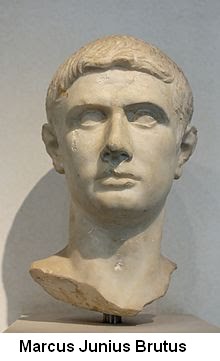
Today is the Ides of March a famous day in European history because of Brutus, Cassius and a bunch of other Roman dudes.

Did you ever wonder what an "ide" was. Here's the explanation from Wikipedia [Ides of March].
The word Ides comes from the Latin word "Idus" and means "half division" especially in relation to a month. It is a word that was used widely in the Roman calendar indicating the approximate day that was the middle of the month. The term was used for the 15th day of the months of March, May, July, and October, and the 13th day of the other months.
I think you have to be more than 50 years old to appreciate this skit. You might have to be Canadian.1


1. Wayne & Shuster are graduates of the University of Toronto.

What Does a Eukaryotic Ribosome Look Like?

 
There's a picture of a yeast (Saccharomyces cerevisiae) ribosome on the cover of the Dec. 16, 2011 issue of Science. The paper inside by Ben-Sham et al. (2011) describes the structure at 3Å resolution.

There's nothing revolutionary here but I thought I would show you the structure just to emphasize a particular point. You can see the same image below without the distracting orange background.

Most of the ribosome is composed of RNA (silver-gray strands). You can see that a lot of this single-stranded RNA forms short double-helical regions when the RNA folds back on itself. Small ribosomal proteins (various colors) decorate the surface of the ribosome by binding to specific regions of the ribosomal RNA.

The overall impression is that the ribosome is a big ball of RNA with a small amount of protein. The actual site of translation, where messenger RNA is translated into a polypeptide, takes place in the middle of the ribosome near the hole you see in this structure. Translation is catalzyed by the RNA component of the ribosome, not by the ribosomal proteins.

I don't know about the rest of you but I grew up with an electron-micrographic image of a ribosome in my head and I just assumed that what I was seeing was a large glob of protein. If course I realized that there was a huge amount or RNA in there somewhere but I didn't think it contributed very much to the dark blobs in the cell.

When the first crystal structures of ribosomes were published I had to stare at them for quite some time in order to purge the old images from my mind and adopt a new perspective.

Eukaryotes have 79 ribosomal proteins and prokaryotic ribosomes have only 52 proteins. There are prokaryotic ribosomal proteins that have no homoogues in eukaryotes and 33 of the eukaryotic ribosomal proteins have no homologues in bacteria—they are eukaryotic specific. Furthermore, many of the eukaryotic proteins differ considerably from their bacterial homologues. (Mostly by extensions of the poly peptide chain.)

The protein components of ribosomes are not highly conserved. One gets the impression that they don't contribute much to the function of a ribosome—an impression confirmed by the fact that the RNA by itself can catalyze polypeptide synthesis. They may help stabilize the three-dimensional structure of the ribosome.


[Image credit: The bottom image is "courtesy of Prof Marat Yusupov (IGBMC, Strasbourg)" from The 9th international Conference on Ribosome Synthesis that takes place this summer in Banff, Alberta, Canada.]

Ben-Shem A, Garreau de Loubresse N, Melnikov S, Jenner L, Yusupova G, Yusupov M. (2011) The structure of the eukaryotic ribosome at 3.0 Å resolution. Science 334:1524-1529. (Epub 2011 Nov 17). [doi: 10.1126/science.1212642]

Monday, March 12, 2012

Monday's Molecule #161

 
Some species make this molecule for a very special reason. Identify the molecule using the common name and the IUPAC name. You must also say why it's important for some species.

Post your answer in the comments. I'll hold off releasing any comments for 24 hours. The first one with the correct answer wins. I will only post correct answers to avoid embarrassment. The winner will be treated to a free lunch with a famous Nobel Laureate, or with me if the Nobel Laureate isn't available.

There could be two winners. If the first correct answer isn't from an undergraduate student then I'll select a second winner from those undergraduates who post the correct answer. You will need to identify yourself as an undergraduate in order to win. (Put "undergraduate" at the bottom of your comment.)

Some past winners are from distant lands so their chances of taking up my offer of a free lunch are slim. (That's why I can afford to do this!)

In order to win you must post your correct name. Anonymous and pseudoanonymous commenters can't win the free lunch.

Winners will have to contact me by email to arrange a lunch date.

Comments are invisible for 24 hours. Comments are now open.

UPDATE: The molecule is taurocholate (2-{[(3α,5β,7α,12α)-3,7,12-trihydroxy-24-oxocholan-24-yl]amino}ethanesulfonate). Taurocholate is a bile salt in mammals. This week's winners are Bill Chaney and Raul A. Félix de Sousa.

Winners
Nov. 2009: Jason Oakley, Alex Ling
Oct. 17: Bill Chaney, Roger Fan
Oct. 24: DK
Oct. 31: Joseph C. Somody
Nov. 7: Jason Oakley
Nov. 15: Thomas Ferraro, Vipulan Vigneswaran
Nov. 21: Vipulan Vigneswaran (honorary mention to Raul A. Félix de Sousa)
Nov. 28: Philip Rodger
Dec. 5: 凌嘉誠 (Alex Ling)
Dec. 12: Bill Chaney
Dec. 19: Joseph C. Somody
Jan. 9: Dima Klenchin
Jan. 23: David Schuller
Jan. 30: Peter Monaghan
Feb. 7: Thomas Ferraro, Charles Motraghi
Feb. 13: Joseph C. Somody
March 5: Albi Celaj


On the Sandwalk

 
Here's a panoramic view of what it's like to be on the Sandwalk behind Down House (Darwin's Home). This is the stretch along the very back of the property at the top of the image in the header for this blog.

360 Panoramic - Sandwalk


[Hat Tip: Michael Fisher]

How to Control Pesky Scientists

 
This is from Rick Mercer, a Canadian comedian [The Rick Mercer Report].


[Hat Tip: Craig Smibert]